Kids’ Martial Arts in Toronto: Why Learning Through Play Builds Confidence, Discipline & Life Skills
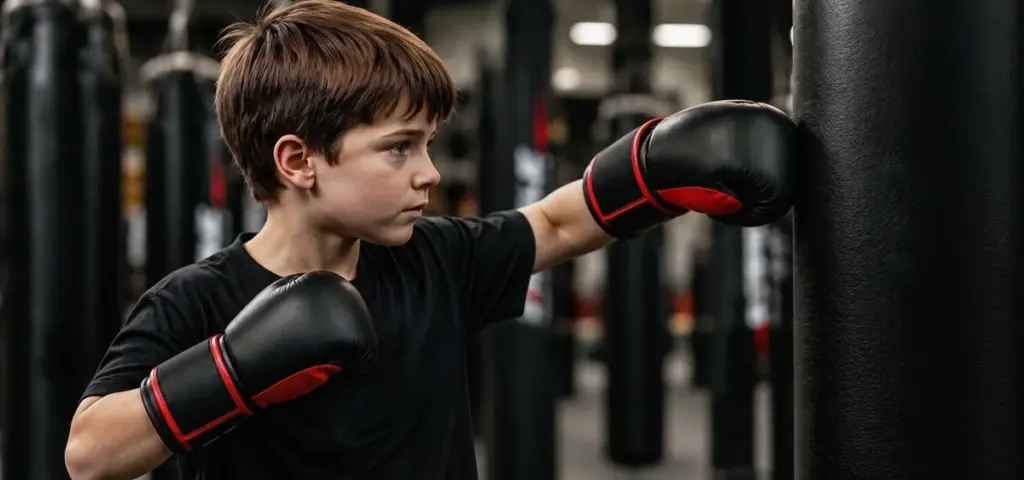
Boxing and Muay Thai can do a lot more for your child than burn off energy. Here’s what the research says—and how we coach it on the mat at Strike Training Club.
When parents ask us about kids’ martial arts, they rarely say, “I want my child to learn a sharper jab.” Usually, they say something closer to: “I want them to feel more confident,” “I want them to focus better,” or “I’m hoping they learn how to handle frustration without giving up.”
As coaches, that’s what we care about most, too.
Traditional martial arts programs have always leaned heavily on structure, repetition, and discipline—and there is real value in that. At the same time, child development research points to something equally important: kids learn best through play.
So which approach wins? On our mats, you don’t have to choose. The best kids’ boxing and Muay Thai classes blend real technical structure with engaging, age-appropriate games. That’s the heart of our philosophy at Strike Training Club: Learning Through Play.
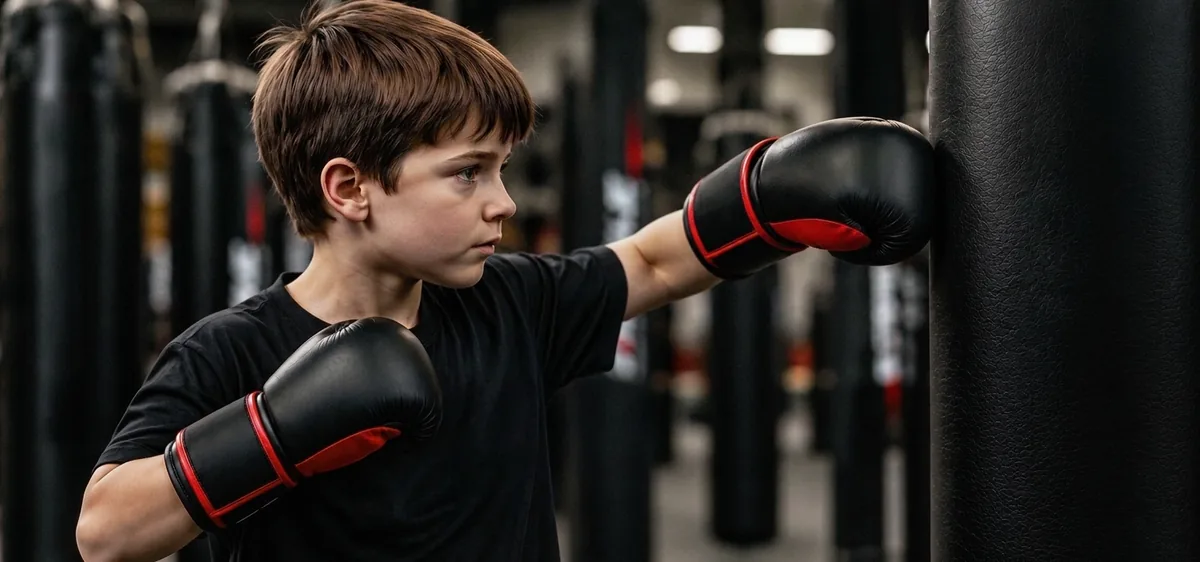
Play Isn’t a Break from Learning. It Is Learning.
Watch a child play for ten minutes and you’ll see them testing boundaries, solving problems, and figuring out how to recover when things don’t go their way. Play is how kids explore the world and practice real skills when nobody’s keeping score.
A 2022 meta-analysis in Child Development reviewed 39 studies comparing guided play with direct instruction and free play. Guided play came out ahead in several key areas, including cognitive flexibility, early math, and spatial understanding—though it wasn’t superior across every single measure (Skene et al., 2022).
On the mat, guided play looks a lot like a classic game with a coaching purpose behind it. Picture a footwork drill disguised as Red Light, Green Light. To the kids, it’s pure fun. As coaches, here is what we’re actually watching them build:
- Self-regulation: Stopping their bodies and resetting their stance on command.
- Active listening: Paying attention and reacting quickly as cues change.
- Balance and coordination: Controlling their weight and footwork while moving at speed.
- Cognitive flexibility: Adapting right away when the rules switch mid-round.
- Social awareness: Sharing the mat, respecting space, and cheering on teammates.
To be clear, no study has tested Red Light, Green Light head-to-head against traditional line drills. What it shows is that one simple game can work a kid’s body, focus, and social skills all at once. Every game we run has a clear reason for being there.
Can Martial Arts Really Improve Discipline and Self-Control?
Yes—and the research backs it up. In a 2004 study published in the Journal of Applied Developmental Psychology, researchers Kimberley Lakes and William Hoyt followed 207 children participating in school-based martial arts training. After three months, the kids in the martial arts group showed greater gains than those in standard PE classes across cognitive and emotional self-regulation, prosocial behaviour, and classroom conduct (Lakes & Hoyt, 2004).
That’s a strong case for structured martial arts. What the research doesn’t say is that you need a strict, drill-sergeant atmosphere to get those results.
In our experience coaching kids, real discipline isn’t about blind obedience—it’s about learning how to manage your own focus, emotions, and reactions when things get challenging. That kind of self-discipline sticks when kids build it from the inside out, supported by coaches who set clear expectations and model respect.
Why Movement, Challenge, and Fun All Matter
Executive function sounds technical, but it’s just the mental skills kids use every day — concentrating, remembering multi-step instructions, holding back impulses, and adapting when plans change.
A well-known 2011 review in Science by Adele Diamond and Kathleen Lee examined what helps executive function grow in children ages 4 to 12. Martial arts, physical activity, and structured games all showed strong potential—especially when two ingredients were present: consistent practice and challenges that gradually increase over time (Diamond & Lee, 2011).
Here’s how we bring that to life in a kids’ boxing or Muay Thai class:
During partner padwork, your child has to remember a combination, listen for their coach’s call, move their feet in rhythm, and adjust when the target changes. Once that feels comfortable, we layer in a pivot, a defensive slip, or a fresh cue. Same drill, slightly harder — and their body and brain are both working.
Age Matters: How We Coach Different Stages
A four-year-old and a twelve-year-old can both get a lot out of martial arts, but they don’t learn—or stay motivated—the same way. Good coaching meets kids right where they are. That’s why our kids’ classes are split into two groups: ages 4–6 and ages 7–12.
Younger Kids (Ages 4–6): Building Foundations Through Movement & Play
Younger children learn best through short, dynamic bursts of movement and imaginative challenges. Instead of asking little ones to hold still for long technical lectures, we introduce fundamentals through obstacle courses, balance challenges, reaction games, and simple strikes. They build coordination, listening habits, and comfort on the mat while genuinely enjoying class.
Older Kids (Ages 7–12): Developing Technique, Grit & Independence
As kids grow, they’re ready for deeper technical coaching. Longer striking combinations, structured rounds, and more advanced games push them to think a few steps ahead, manage their energy, and execute under a little bit of pressure. Play doesn’t disappear — it turns into healthy competition, sharper problem-solving, and pride in getting good at something.
Confidence Comes from Progress, Not Perfection
You can’t hand a child confidence—they earn it through small, real wins. It happens the moment they face something unfamiliar, practice through the awkward stage, and realize, “I can actually do this.”
Maybe your child struggles to coordinate a two-punch combination during week one, and by week four it clicks effortlessly. Or maybe they walk in shy about working with a partner, and a month later they’re the first one smiling and gloved up.
On our mats, mistakes aren’t something to hide—they’re part of training. When we celebrate effort, curiosity, and steady improvement instead of perfection, kids stop worrying about getting everything right on the first try and start enjoying the process of getting better.
Social and Emotional Skills on the Mat
Training is one of the best places for kids to learn how to handle their emotions:
- Partner drills teach clear communication, trust, and teamwork.
- Group games build patience, turn-taking, and sportsmanship.
- New techniques create a safe space to feel frustrated—and learn how to reset and try again.
When a child gets stuck on a new move, a good coach doesn’t rush past it. We help them pause, take a breath, and break the skill down into smaller steps. Martial arts isn’t a magic fix for every struggle, but consistent, encouraging coaching gives kids dozens of real-world reps at handling setbacks calmly.
The Strike Approach: Where Play Meets Purpose
Our kids’ boxing and Muay Thai programs in Toronto’s west end come back to a few things:
- Confidence: trying something hard and finding out you can do it.
- Discipline: showing up, listening, doing the work even when it’s not the fun part.
- Respect: for your coaches, your training partners, and yourself.
- Coordination: real boxing and Muay Thai fundamentals — footwork, balance, timing — not just running around.
- Resilience: messing up a combination, shaking it off, and going again.
- Community: knowing everyone’s name, looking out for the new kid, feeling like the gym is your place.
Play-Based or Traditional: What Should Parents Look For?
Here’s the honest answer: research shows structured martial arts supports self-regulation, and guided play supports cognitive development — but there isn’t enough direct head-to-head research to say one style is better than the other.
Instead of worrying about labels, look for a program that offers:
- Coaching that fits your child’s age, not a one-size-fits-all class.
- Warm, attentive coaches who know your child’s name and encourage effort.
- Clear boundaries and structure paired with genuine fun.
- Room to grow at a pace that challenges them without overwhelming them.
The real question isn’t play or discipline — it’s whether your child is learning, having fun, and wants to come back next week.
Frequently Asked Questions
What should I look for in a kids’ martial arts program in Toronto?
Look for coaches who adapt their teaching to your child’s age, classes that balance clear structure with engaging movement, and a gym culture where beginners feel welcome. Watching how coaches speak to kids on the mat will tell you everything you need to know.
Are kids’ boxing and Muay Thai classes only for athletic or outgoing kids?
Not at all. Plenty of kids walk in for their first class feeling shy, hesitant, or unsure of their coordination. Step-by-step coaching and small wins help quiet or cautious kids build confidence from day one—no prior experience required.
What gear does my child need to get started?
For a first class, comfortable athletic clothing and a water bottle are all your child needs — we’ll lend your child gloves and wraps for their first class. Once they’re ready to train regularly, our coaches will walk you through sizing for properly fitted kids’ boxing gloves and hand wraps.
Where can I find kids’ martial arts classes near the Junction, Bloor West Village, and High Park?
Strike Training Club is located right on Dundas Street West, making us an easy stop for families across the Junction, Runnymede, Bloor West Village, and High Park. If you’re in Toronto’s west end and looking for kids’ boxing or Muay Thai classes, we’d love to welcome your family into the club.
Ready to See If Strike Is the Right Fit for Your Child?
Whether your child is brand new to martial arts or just needs somewhere active to belong, the best way to start is to come visit the gym.
Book your child’s first class free — no experience needed, and we’ll lend them gloves and wraps for the day.
Power in Movement. Strength in Community.
Research & Further Reading
- Skene, K., et al. (2022). Can guidance during play enhance children’s learning and development in educational contexts? A systematic review and meta-analysis. Child Development, 93(4), 1162–1180. https://doi.org/10.1111/cdev.13730
- Lakes, K. D., & Hoyt, W. T. (2004). Promoting self-regulation through school-based martial arts training. Journal of Applied Developmental Psychology, 25(3), 283–302. https://doi.org/10.1016/j.appdev.2004.04.002
- Diamond, A., & Lee, K. (2011). Interventions shown to aid executive function development in children 4 to 12 years old. Science, 333(6045), 959–964. https://pmc.ncbi.nlm.nih.gov/articles/PMC3159917/