Boxing vs. Muay Thai: Which Is Right for You?
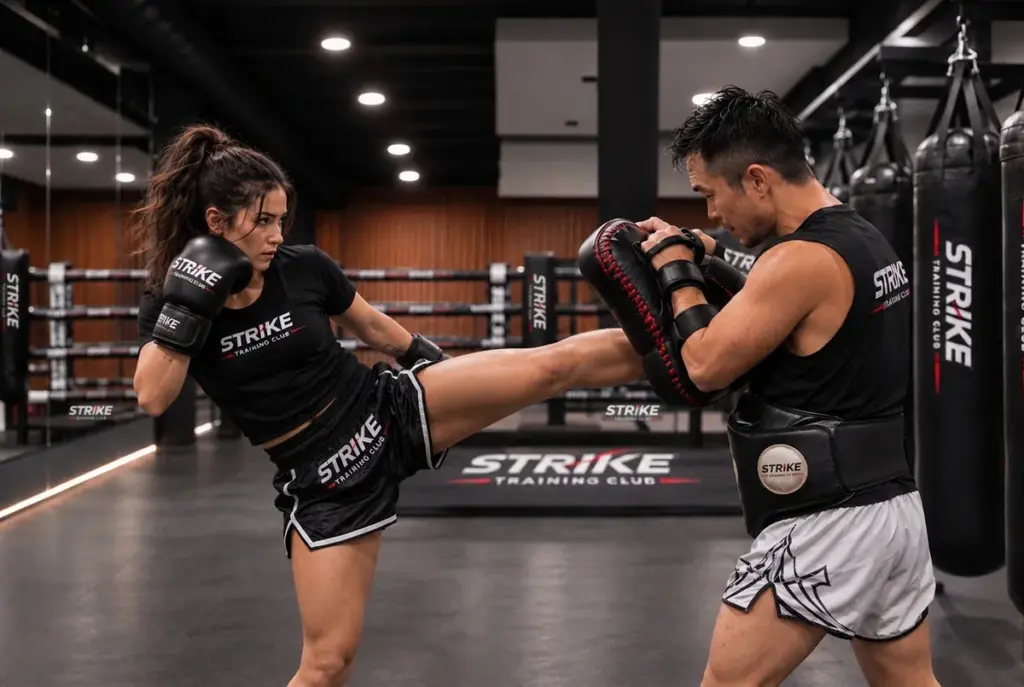
So you want to try boxing or Muay Thai, and you're stuck on which one. Good problem to have. We get asked this all the time, and the honest answer is that you can't really go wrong with either.
They do feel different, though. If you're looking at boxing or Muay Thai classes in Toronto, here's how we explain the two to people walking in for the first time.
What's the Difference Between Boxing and Muay Thai?
It comes down to what you're allowed to hit with.
Boxing is punches only: jabs, crosses, hooks and uppercuts, built on footwork, head movement and defence. It's a sport about precision, timing and distance. A good boxer doesn't just hit — they make you miss, and that's a big reason skilled boxers are so hard to touch. Slipping, rolling and ducking punches, and moving your feet to create angles and control distance, are part of the training from day one.
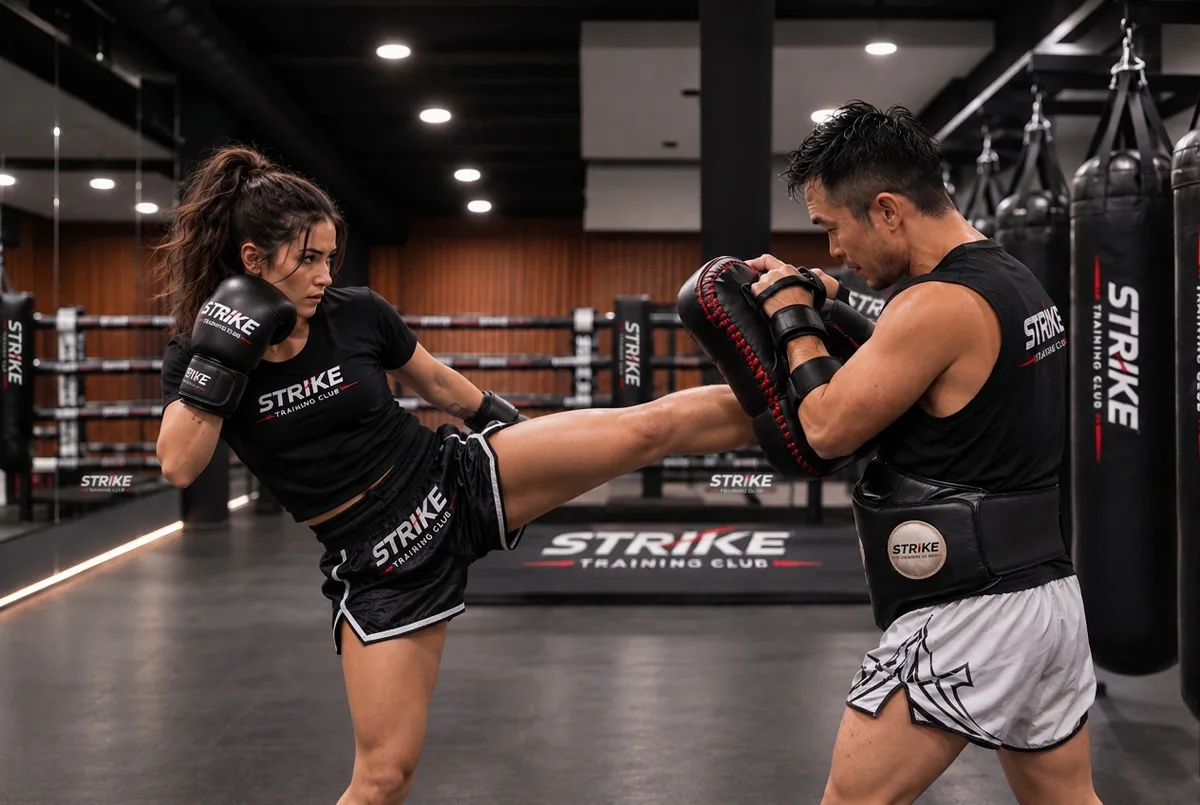
Muay Thai, the "Art of Eight Limbs," uses punches, kicks, knees and elbows. It also includes the clinch, which is close-range control where you manage your opponent's position and set up knees and elbows.
Boxing goes deep on the hands and emphasizes footwork and head movement, while Muay Thai gives you a wider toolbox. Neither one is better, and plenty of people cross-train in both because each one teaches you something the other doesn't.
There's a difference in feel, too. It's not always the case, but traditionally boxing leans toward volume and speed: lots of punches, thrown fast, in sharp combinations. Muay Thai leans toward power and balance: heavier, committed strikes built on a strong base, since you're often standing on one leg to throw a kick or a knee. Plenty of boxers hit hard and plenty of Muay Thai fighters are fast, so think of it as a tendency, not a rule.
Which Is Better for Fitness?
Both give you a serious full-body workout, so let's look at what each one does for you.
Boxing for fitness
Don't let the focus on punching fool you. In boxing, you punch with your legs. Not literally, but the power in a punch starts from the ground, travels through your hips and core, and finishes at your fist. Add footwork, defensive movement and round after round of combinations, and you've got a workout that hammers your cardio and your muscular endurance.
Boxing can help improve:
- Cardiovascular fitness and endurance
- Hand-eye coordination and reaction time
- Core strength and rotational power
- Footwork, balance and agility
- Upper-body muscular endurance
Muay Thai for fitness
Muay Thai asks different things of your body. On top of punching, you're kicking, kneeing and chaining strikes together, which takes balance, coordination and control from head to toe.
Muay Thai can help develop:
- Cardiovascular endurance
- Full-body strength and muscular stamina
- Balance and coordination
- Hip mobility and flexibility
- All-over conditioning
The bottom line: the best workout is the one you actually keep showing up for. Pick the one that sounds fun to you.
Which Is Easier for Beginners?
Boxing is usually a little easier to start with because there are fewer techniques to learn up front. You begin with your stance, your guard, a handful of punches and basic footwork. Those are quick to introduce, but don't mistake simple for easy. Fighters spend years refining them.
Muay Thai has a bigger technical menu. Alongside punches, you'll learn kicks, knees and defensive movement, and later on elbows and the clinch.
That doesn't make it too hard for a first-timer. With good coaching and a step-by-step approach, anyone can start either one with zero martial arts background. At Strike Training Club in Toronto's Junction neighbourhood, we bring beginners in through structured, progressive training that builds skill and confidence at the same time. Nobody gets thrown in the deep end.
Which Is Better for Self-Defence?
Both teach practical striking skills that can help in a self-defence situation.
Boxing builds sharp punching, distance management, defensive movement and the ability to stay composed when someone is coming at you. Those skills matter, and they're a big reason boxers are so hard to hit.
Muay Thai adds kicks, knees, elbows and the clinch, so you have more options at every range, especially up close. That's why many coaches (us included) see it as the more complete striking system of the two.
Here's the part we always say out loud: training is only one piece of staying safe. Awareness, staying out of confrontations, de-escalating and knowing when to walk away matter just as much. No martial art guarantees your safety in a real situation, and anyone who tells you otherwise is selling something.
Do You Have to Spar?
No. This is the number one worry we hear from beginners, so let's clear it up.
You don't have to spar to get the benefits of boxing or Muay Thai. Lots of people train purely for fitness, stress relief, or the fun of learning a new skill. Sparring and competition are available for people who want to go down that road, but it's your call, and nobody will pressure you into it.
A typical class might include:
- Warm-ups and movement drills
- Learning and practising technique
- Shadowboxing
- Heavy-bag rounds
- Partner padwork
- Conditioning to finish
You'll build skill, get fit and have a great time without ever stepping into a ring.
Boxing vs. Muay Thai: Quick Comparison
| Boxing | Muay Thai | |
|---|---|---|
| Main techniques | Punches | Punches, kicks, knees, elbows |
| Head movement | Major emphasis | Used, but less of a focus |
| Footwork | Major emphasis | Important, with different movement patterns |
| Traditional emphasis | Volume and speed | Power and balance |
| Lower-body involvement | Footwork and power generation | Footwork, kicking, knees and balance |
| Learning curve | Fewer techniques to start | Broader technical foundation |
| Fitness benefits | Full-body conditioning | Full-body conditioning |
| Beginner-friendly | Yes | Yes |
| Sparring required | No | No |
So, Which One Should You Choose?
If you love the idea of fast combinations, footwork and getting really precise with your hands, start with boxing.
If you want a wider range of tools and you're excited about kicks and knees, start with Muay Thai.
Still can't decide? Try both. Training in both gives you a more complete understanding of striking, and it keeps your workouts fresh. Plenty of people train both.
And you don't need to be in shape first. Getting in shape is what the training is for.
Frequently Asked Questions
Do I need experience to start boxing or Muay Thai?
No. Most people who walk in have never thrown a punch. Our beginner training starts from the basics and builds from there.
What should I bring to my first class?
Wear comfortable workout clothes, bring water and a towel, and come ready to sweat. Don't worry about gloves or wraps for your first class — we've got loaners you can borrow.
Can I do boxing and Muay Thai in the same week?
Absolutely. Many people do. The skills overlap, and each one makes the other better.
Is Muay Thai or boxing better for weight loss?
Both burn a lot of energy and build full-body conditioning. The one you enjoy enough to do consistently will get you better results.
Is it safe for beginners?
Yes. With proper coaching, a gradual progression and no pressure to spar, both are very approachable. Tell your coach about any injuries or concerns before class and they'll help you train smart.
Try Boxing and Muay Thai at Strike Training Club in Toronto
Strike Training Club opens December 7, 2026 in Toronto's Junction neighbourhood at 3261 Dundas Street West, close to High Park, Bloor West Village and Roncesvalles. We offer boxing, Muay Thai and kickboxing classes for every experience level.
We focus on real technical instruction, tough workouts and a welcoming room where nobody feels out of place on day one. Whether you want to get fit, learn something new or challenge yourself, there's a spot for you here.
Ready to give it a shot? Book your first class free and come see which one clicks for you.
Power in Movement. Strength in Community.